Choosing between imported marble and Indian granite is an important decision when building or renovating…
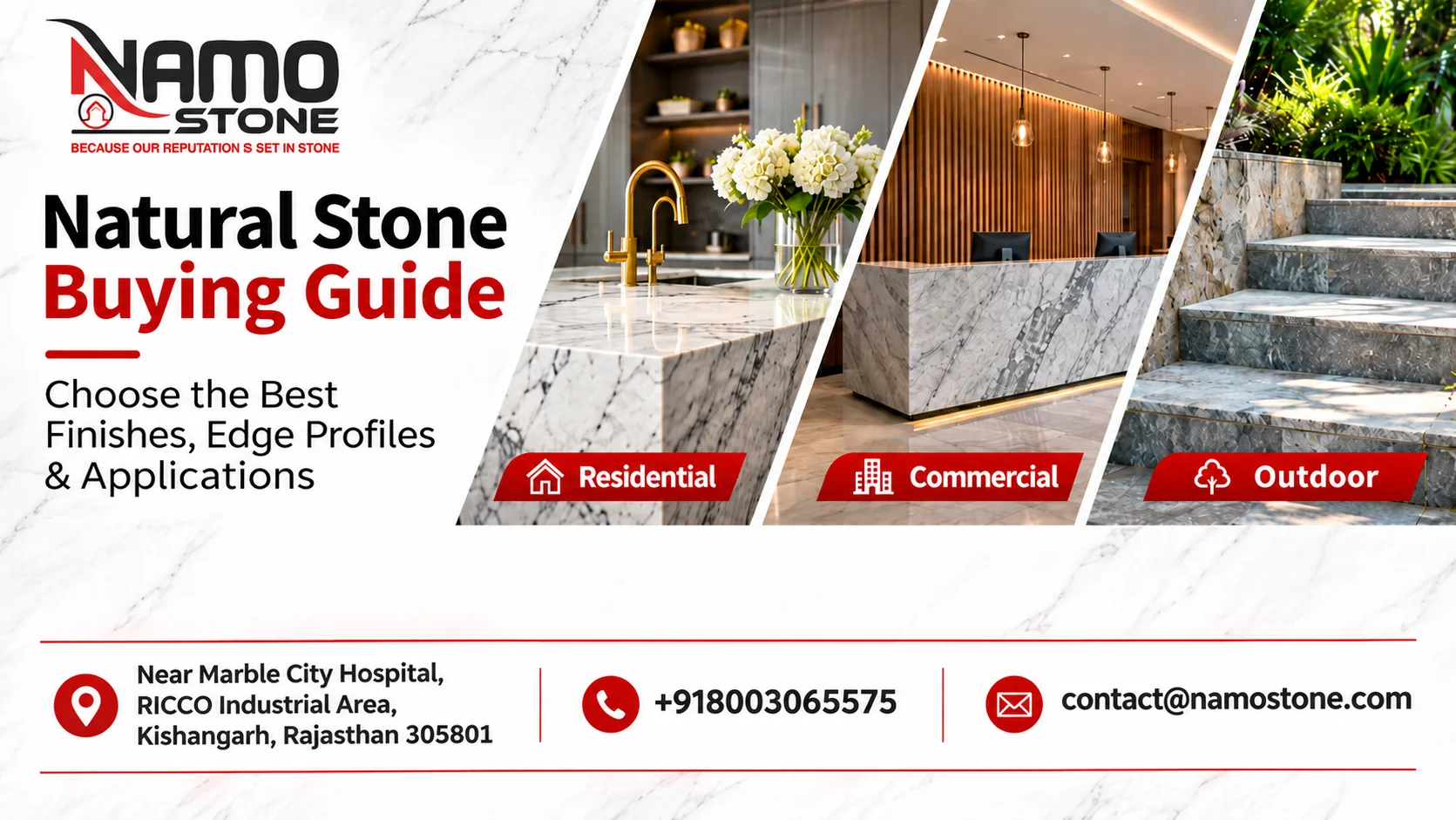
A Guide to Stone Fabrication & Edge Profiling: Choosing the Right Finish for Commercial and Residential Projects
Natural stone is a popular choice in modern architecture and interior design because of its durability, versatility, and timeless appearance. From kitchen countertops and bathroom vanities to commercial flooring and hotel reception areas, natural stone adds elegance and functionality to different spaces. However, selecting the right stone is only the beginning. The final appearance and usability also depend on stone fabrication, edge profiling, and surface finishing. Professional stone fabrication transforms raw stone slabs into customised products, while stone edge profiling adds the finishing details that influence the overall design. Choosing the appropriate finish is equally important for ensuring that the stone complements its intended application. In this guide, we explore different stone fabrication techniques, popular edge profiles, surface finishes, and their applications in residential and commercial projects.
What Is Stone Fabrication?
Stone fabrication is the process of cutting, shaping, polishing, and finishing natural stone slabs to create customised architectural and interior products. Materials such as granite, marble, sandstone, limestone, and quartzite are commonly used for countertops, flooring, staircases, wall cladding, and decorative installations. The typical natural stone fabrication process includes:-
- Stone Selection: Choosing suitable stone based on colour, pattern, durability, and application.
- Measurement: Preparing accurate measurements according to project requirements.
- Cutting: Using specialised machinery to cut slabs into the required dimensions.
- Edge Profiling: Shaping exposed edges according to the selected design.
- Surface Finishing: Applying polished, honed, leathered, or textured finishes.
- Quality Inspection: Checking dimensions, surface consistency, and edge detailing.
- Packaging: Preparing fabricated stone pieces for transportation and installation.
Modern fabrication facilities use CNC machines, bridge saws, and specialised polishing equipment to achieve accurate and consistent results.
Popular Types of Stone Edge Profiles
Stone edge profiling involves shaping the exposed edges of stone slabs to achieve specific functional and decorative effects. The right profile can enhance the appearance of countertops, staircases, vanities, and other installations.
1. Straight or Eased Edge:- A straight edge profile features a clean, flat design with slightly softened corners. It is a popular choice for contemporary interiors because of its simple and minimal appearance.
Applications: Kitchen countertops, office desks, bathroom vanities, and reception counters.
2. Bullnose Edge:- The bullnose edge profile features a fully rounded edge that creates a smooth and elegant appearance. It works particularly well in traditional and transitional interior designs.
Applications: Kitchen islands, bathroom countertops, stair treads, and residential surfaces.
3. Bevel Edge:- A bevel edge profile features an angled cut along the exposed edge of the stone. It creates a subtle geometric detail and complements modern architectural designs.
Applications: Kitchen worktops, decorative surfaces, wall panels, and commercial counters.
4. Ogee EdgeL:- The ogee edge profile features a decorative S-shaped curve that adds sophistication and visual depth. It is commonly selected for traditional and luxury interiors.
Applications: Premium kitchen countertops, hotel reception desks, and decorative bathroom vanities.
5. Half Bullnose Edge:- A half bullnose edge has a rounded upper section with a relatively straight lower section. It offers a balanced appearance between simple and decorative profiles.
Applications: Kitchen countertops, dining surfaces, and bathroom installations.
6. Waterfall Edge:- A waterfall edge design extends the countertop stone vertically down the sides of an island or cabinet. It creates a continuous appearance and highlights the natural patterns of the stone.
Applications: Modern kitchen islands, luxury apartments, hotel suites, and premium commercial interiors.
Different Types of Stone Surface Finishes
Along with edge profiling, stone surface finishing determines the texture, appearance, and maintenance requirements of natural stone. Different finishing techniques can create completely different looks using the same stone variety.
1. Polished Finish
A polished stone finish creates a glossy and reflective surface that highlights the natural colours, patterns, and veining of the material.
Benefits:
- Enhances natural stone colours.
- Creates a luxurious appearance.
- Generally easy to wipe clean.
- Suitable for decorative interior applications.
Applications: Marble flooring, granite countertops, hotel lobbies, and bathroom vanities.
2. Honed Finish
A honed stone finish provides a smooth, matte surface with minimal reflection. It is ideal for contemporary designs that require a subtle and understated appearance.
Benefits:
- Reduces surface glare.
- Creates a sophisticated matte look.
- Provides a softer visual effect.
- Can make certain surface etching less noticeable.
Applications: Residential flooring, bathroom surfaces, wall cladding, and countertops.
3. Leathered Finish
A leathered stone finish is created using specialised abrasive brushes that produce a subtle textured surface.
Benefits:
- Adds natural texture and depth.
- Creates a distinctive low-sheen appearance.
- Can make fingerprints less noticeable.
- Highlights the character of selected stones.
Applications: Kitchen countertops, reception counters, luxury interiors, and feature surfaces.
4. Flamed Finish
A flamed stone finish is produced through controlled heat treatment, particularly on suitable granite varieties. It creates a rough and textured surface.
Benefits:
- Provides a distinctive textured appearance.
- Reduces surface reflectivity.
- Can offer improved traction when properly specified and tested.
- Suitable for selected exterior environments.
Applications: Outdoor pathways, exterior stairs, terraces, and landscaping.
5. Brushed Finish
A brushed stone finish uses specialised abrasive brushes to create a gently textured surface. It offers a natural appearance suitable for different architectural styles.
Applications: Feature walls, flooring, exterior design elements, and decorative installations.
Stone Fabrication for Residential Projects
Residential stone installations require a balance between appearance, durability, functionality, and maintenance. Natural stone can enhance different areas of a home when the right material and finish are selected.
Kitchen Countertops: Granite and quartzite are popular choices for kitchen countertops. Polished and leathered finishes offer different visual effects, while straight and bullnose edges provide practical design options.
Bathroom Vanities: Marble and granite add elegance to bathroom interiors. Custom fabrication allows precise sink cut-outs, tap openings, and decorative edge detailing.
Staircases and Flooring: Natural stone staircases and flooring create a sophisticated appearance. Appropriate surface textures and edge treatments are particularly important for safety and everyday use.
Feature Walls: Custom stone panels and decorative installations can add depth and character to living rooms, entrance areas, and other interior spaces.
Stone Fabrication for Commercial Projects
Commercial environments often experience higher foot traffic and more frequent cleaning than residential spaces. Therefore, commercial stone fabrication requires careful attention to material selection, consistency, and installation specifications.
Hotels and Hospitality: Marble and granite are widely considered for reception counters, lobby flooring, bathroom installations, and decorative wall panels.
Office Buildings: Natural stone can enhance corporate reception desks, conference tables, flooring, and interior wall designs. Straight and bevel edge profiles complement modern office environments.
Retail Stores and Showrooms: Custom stone counters, display surfaces, and flooring can help create premium shopping environments.
Restaurants and Cafés: Stone is commonly used for bar tops, service counters, tabletops, and decorative interiors. Materials should be selected according to cleaning requirements and intended use.
Public Buildings: Airports, educational institutions, and other public facilities may require large-scale stone flooring and wall installations. Dimensional accuracy and consistent finishing are essential.
How to Choose the Right Stone Finish for Your Project
Selecting the appropriate stone finish and edge profile involves considering several factors.
- Project Application: Identify whether the stone will be used for countertops, flooring, staircases, wall cladding, or outdoor installations.
- Stone Characteristics: Consider the hardness, porosity, veining, and durability of granite, marble, sandstone, or other selected materials.
- Interior Design: Match the edge profile and surface finish with the overall architectural style.
- Maintenance Requirements: Understand the cleaning and sealing requirements of the selected natural stone.
- Environmental Conditions: Outdoor applications require consideration of moisture, temperature changes, drainage, and surface traction.
- Fabrication Budget: Cutting complexity, material thickness, edge detailing, and surface finishing can influence the overall project cost.
Always review physical samples and discuss technical specifications with an experienced stone professional before finalising your selection.
Common Mistakes to Avoid in Stone Fabrication
Even premium-quality stone may not deliver the desired results without proper planning. Avoid these common mistakes:
- Choosing a finish based only on appearance without considering functionality.
- Ignoring the suitability of edge profiles for the intended application.
- Not checking physical stone samples before purchasing.
- Overlooking maintenance and sealing requirements.
- Using inaccurate measurements during fabrication.
- Selecting unsuitable surface finishes for wet or outdoor environments.
Careful planning and professional fabrication help achieve consistent results and reduce installation-related issues.
Why Choose Namo Stone for Natural Stone Requirements?
Choosing the right natural stone supplier is an important step in any residential or commercial project. Namo Stone provides an opportunity to explore natural stone options for different architectural and interior design requirements. Whether you are planning a home renovation, designing a commercial property, or sourcing materials for an architectural project, selecting suitable stone is essential. When evaluating natural stone options, consider material quality, colour consistency, available finishes, dimensions, and project requirements. Explore the available collections at Namo Stone and discover natural stone options that complement your design vision.
Frequently Asked Questions (FAQs)
Stone fabrication involves cutting, shaping, polishing, and finishing natural stone slabs to create products such as countertops, flooring, staircases, and wall panels.
Popular stone edge profiles include straight, bullnose, half bullnose, bevel, ogee, and waterfall designs.
Polished and leathered finishes are popular choices. The selection depends on the desired appearance, stone characteristics, and maintenance requirements.
Polished stone has a glossy, reflective surface, whereas honed stone has a smooth matte appearance with minimal reflection.
Flamed and appropriately textured finishes can be considered for outdoor applications. Actual suitability depends on the material, installation conditions, and slip-performance testing.
Yes. Costs can vary according to the selected profile, stone thickness, fabrication complexity, and quantity.
Clean natural stone using suitable pH-neutral cleaners, avoid harsh chemicals on sensitive stones, wipe spills promptly, and follow recommended sealing procedures.
Conclusion
Choosing the right stone fabrication techniques, edge profiles, and surface finishes is essential for creating beautiful and functional architectural spaces. From straight and bullnose edges to polished, honed, and leathered finishes, every detail contributes to the final appearance and usability of natural stone. Whether you are planning a residential renovation or a large commercial development, consider the material, application, maintenance requirements, and architectural design before making your selection. Explore natural stone possibilities with Namo Stone and create spaces that combine timeless beauty with practical functionality.

Related Posts
This Post Has 0 Comments