
Green marble is becoming an attractive choice for architects, interior designers, and homeowners who want…
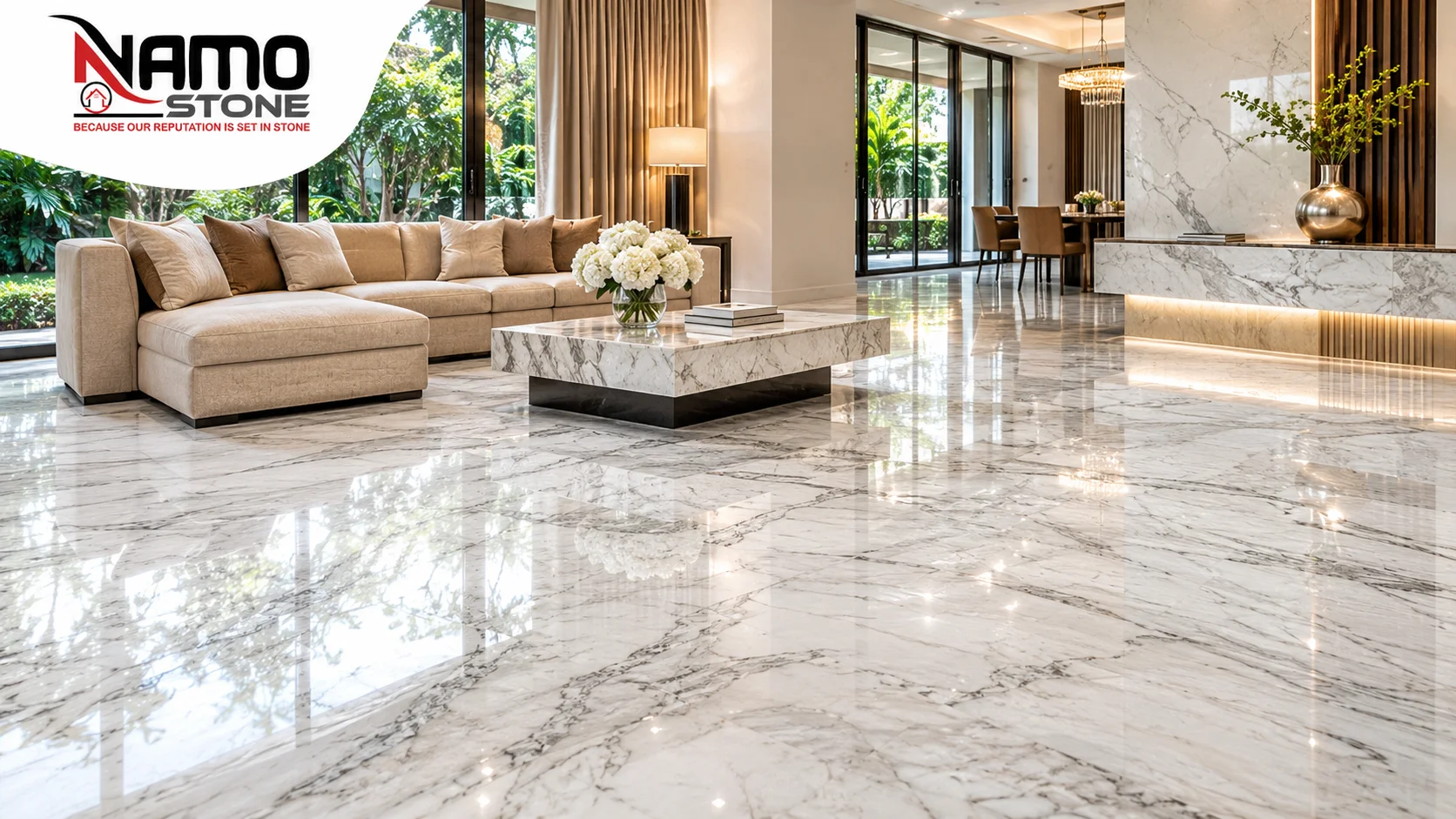
Marble Flooring: Types, Benefits, Finishes & Installation Guide
Marble flooring has remained one of the most preferred choices in architecture and interior design because of its natural beauty, elegant patterns, and timeless appeal. From luxury homes and modern apartments to hotels, offices, and commercial spaces, marble flooring adds sophistication and character to different environments. Available in a variety of colours, patterns, textures, and finishes, natural marble offers flexibility for different architectural styles. Whether you prefer classic white marble, dramatic black patterns, or subtle neutral shades, the right marble floor can transform the appearance of an interior. However, selecting marble flooring involves more than choosing an attractive colour. Factors such as stone quality, surface finish, tile dimensions, installation methods, and maintenance requirements also influence its long-term appearance and performance. In this guide, we explore the types of marble flooring, its benefits, popular finishes, design possibilities, installation process, and maintenance tips to help you make an informed decision.
What Is Marble Flooring?
Marble flooring is a natural stone flooring solution made from cut and processed marble slabs or tiles. Marble is a metamorphic rock formed when limestone or dolostone undergoes heat and pressure over geological periods. Its natural mineral composition creates distinctive colours, patterns, and veins. Since marble is a natural material, every slab can have variations in appearance, making each flooring installation unique. Natural marble flooring is commonly considered for living rooms, bedrooms, entrance areas, hotels, reception spaces, staircases, and other interior applications. Its appearance can complement traditional, contemporary, minimalist, and luxury architectural designs.
Popular Types of Marble Flooring
Different marble varieties offer different colours, patterns, and visual characteristics. Choosing the right type depends on your interior theme, project requirements, and personal preferences.
1. White Marble Flooring
White marble flooring is a popular choice for interiors that require a bright, elegant, and spacious appearance. Its light background and natural veining complement contemporary and traditional architectural designs. It works particularly well in living rooms, bedrooms, hallways, hotels, and luxury apartments.
2. Black Marble Flooring
Black marble flooring creates a bold and sophisticated appearance. Its darker background, combined with natural white or contrasting veins, makes it suitable for statement interiors. It can be used in entrance areas, reception spaces, luxury bathrooms, and selected commercial interiors.
3. Green Marble Flooring
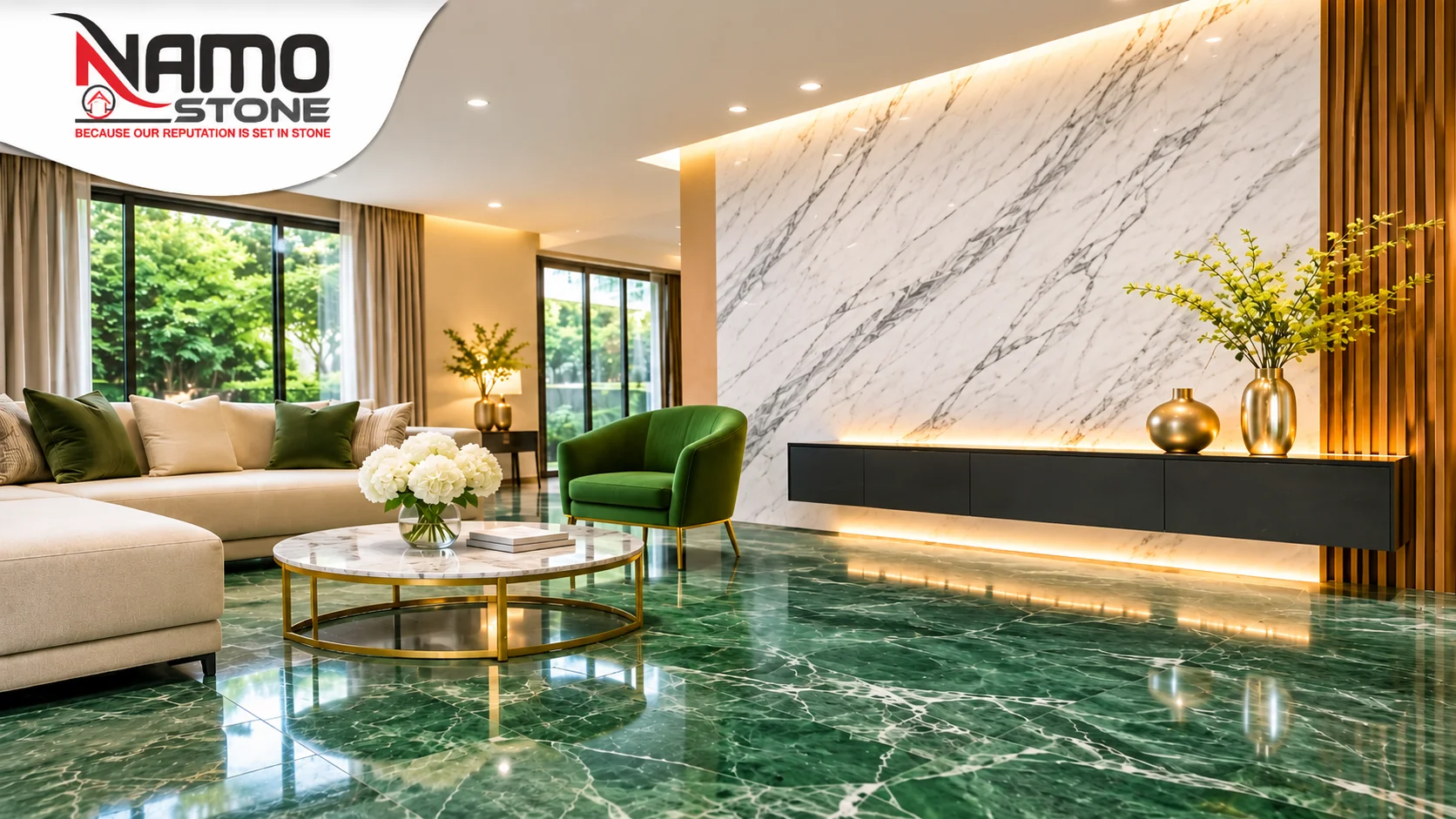
Green marble flooring introduces natural colour and distinctive patterns into interior spaces. Its shades can range from light green to deeper forest-green tones, depending on the variety. It complements wooden furniture, brass accents, neutral walls, and contemporary interior designs.
4. Beige Marble Flooring
Beige marble flooring creates a warm and understated appearance. Its neutral shades make it easy to coordinate with different furniture styles, wall colours, and decorative materials. It is commonly considered for living areas, bedrooms, hotel interiors, and sophisticated commercial spaces.
5. Imported Marble Flooring
Imported marble flooring offers a wide selection of natural colours, patterns, and decorative characteristics from different stone-producing regions. It is often selected for premium residential and commercial projects where specific visual patterns or distinctive stone varieties are required. When selecting imported marble, review physical samples, slab consistency, technical specifications, and the supplier’s product information.
Benefits of Marble Flooring
There are several reasons homeowners, architects, and interior designers consider marble for flooring applications.
1. Timeless Natural Appearance
One of the biggest advantages of natural marble flooring is its distinctive appearance. Natural veining and colour variations create an elegant finish that can complement different interior styles.
2. Wide Range of Colours and Patterns
Marble is available in numerous colour variations, including white, black, green, beige, grey, and other natural shades. This variety provides flexibility when planning different interior designs.
3. Versatile Design Applications
Marble floor tiles can be used in living rooms, bedrooms, entrance areas, hotel lobbies, offices, and selected commercial environments. Different slab sizes, layouts, and patterns allow designers to create customised flooring designs.
4. Can Be Professionally Restored
Suitable marble flooring can be professionally ground and repolished when its surface becomes worn or loses its original appearance. This allows certain floors to be refreshed rather than immediately replaced.
5. Complements Luxury Interiors
Marble works beautifully with wooden furniture, glass partitions, metallic accents, decorative lighting, and neutral colours. These combinations make it a popular material for sophisticated architectural spaces.
Different Types of Marble Flooring Finishes
The surface finish plays an important role in the appearance and practical performance of marble flooring.
1. Polished Marble Finish
A polished marble finish creates a smooth, glossy, reflective surface that highlights natural colours and veining. It is commonly considered for living rooms, bedrooms, hotel lobbies, and decorative interior spaces.
2. Honed Marble Finish
A honed marble finish provides a smooth matte or low-sheen appearance. It offers a more understated alternative to highly reflective polished marble. It can be considered for contemporary interiors and selected flooring applications.
3. Leathered Marble Finish
A leathered marble finish creates a subtly textured surface with a distinctive low-sheen appearance. Its suitability depends on the specific stone variety, fabrication process, and intended application.
4. Brushed Marble Finish
A brushed marble finish uses specialised abrasive brushes to create a gently textured appearance. It can add natural character to selected decorative and architectural flooring applications.
Important: Surface finishes can influence traction, cleaning, and maintenance. For bathrooms, entrances, and other areas exposed to moisture, select a finish based on tested slip performance and the conditions of use.
Marble Flooring Design Ideas for Modern Interiors
Selecting the right marble variety is only one part of creating attractive flooring. The layout, tile dimensions, colours, and surrounding materials also influence the final appearance.
Large-Format Marble Flooring: Large marble slabs or tiles can create a more continuous appearance with fewer visible joints. They work well in spacious living rooms, hotel lobbies, and luxury interiors.
Bookmatched Marble Designs: Bookmatching involves arranging adjacent slabs to create symmetrical or mirrored natural patterns. It is particularly effective in decorative installations.
Marble Flooring with Wooden Furniture: Combining marble with natural wood creates a balanced contrast between smooth stone surfaces and warm textures.
Contrasting Marble Patterns: Combining carefully selected marble colours can create decorative borders, geometric layouts, and customised flooring designs.
Minimalist Marble Interiors: Neutral marble shades complement minimalist spaces by creating a clean and refined visual foundation.
Marble Flooring Installation Process
Proper installation is essential for achieving an even, visually consistent, and durable marble floor. The process should be handled by experienced stone installation professionals.
Step 1. Surface Preparation
The installation base should be clean, stable, properly cured, and suitably levelled. Any surface irregularities or moisture concerns should be addressed before installation.
Step 2. Marble Inspection and Selection
Inspect the marble tiles or slabs for visible cracks, colour variations, thickness differences, and surface defects. A dry layout helps plan the placement and distribution of natural patterns.
Step 3. Cutting and Sizing
Marble pieces should be measured and cut according to the approved flooring layout. Accurate cutting helps achieve better alignment around walls, corners, and architectural details.
Step 4. Adhesive and Installation
Use a compatible setting material selected according to the marble type, slab dimensions, substrate, and installation conditions. Maintain consistent joints and correct alignment throughout the installation.
Step 5. Grouting and Finishing
After the installation material has cured according to its manufacturer’s instructions, suitable grout can be applied. The surface should be cleaned using compatible products.
Step 6. Sealing and Final Inspection
Depending on the marble’s porosity and supplier recommendations, an appropriate penetrating sealer may be applied. Inspect the completed flooring for alignment, lippage, surface consistency, and finishing quality.
Marble Flooring for Residential and Commercial Spaces
Marble offers design flexibility for different environments, but material selection should always consider the intended use.
| Application | Suitable Design Considerations |
| Living Rooms | Elegant patterns and polished or honed finishes |
| Bedrooms | Neutral colours and subtle veining |
| Bathrooms | Appropriate surface texture and moisture management |
| Kitchens | Stain and etching considerations |
| Hotel Lobbies | Traffic suitability and maintenance planning |
| Office Interiors | Consistent layouts and practical finishes |
| Retail Spaces | Material durability and cleaning requirements |
For commercial projects, special attention should be given to expected foot traffic, cleaning frequency, surface traction, and long-term maintenance.
Marble Flooring Maintenance Tips
Proper care helps preserve the natural appearance of marble floors.
- Clean regularly using a suitable pH-neutral stone cleaner.
- Avoid acidic products such as vinegar and lemon-based cleaners.
- Wipe spills promptly to minimise staining.
- Use mats at entrances to reduce abrasive dirt.
- Avoid dragging heavy furniture across the surface.
- Follow the supplier’s recommendations for sealing.
- Arrange professional polishing or restoration when necessary.
Because marble can be sensitive to acids and certain chemicals, choosing appropriate cleaning products is particularly important.
Why Choose Namo Stone for Natural Stone Requirements?
Selecting the right natural stone supplier is an important part of any flooring or architectural project. Namo Stone, located in Kishangarh, Rajasthan, serves customers exploring natural stone options for residential, commercial, and architectural applications. When selecting marble flooring, consider the stone variety, natural patterns, colour consistency, available finishes, dimensions, and suitability for the intended environment. Whether you are designing a contemporary home, renovating a luxury apartment, or planning a commercial interior, selecting the right marble can help bring your design vision to life.
Explore natural stone options at Namo Stone and discover materials for your next architectural project.
Contact Namo Stone:
- Address: Near Marble City Hospital, RICCO Industrial Area, Kishangarh, Rajasthan 305801.
- Phone: +91 8003065575.
- Email: contact@namostone.com.
Frequently Asked Questions (FAQs)
Popular options include white, black, green, beige, and imported marble varieties. The best choice depends on the desired colour, natural pattern, application, and design style.
Marble flooring offers natural patterns, a wide range of colours, versatile design applications, and the possibility of professional restoration through grinding and repolishing.
Yes. Marble complements modern homes through its natural colours, distinctive patterns, and compatibility with contemporary furniture, lighting, and interior materials.
Polished and honed finishes are common choices. However, the appropriate finish depends on the room, expected foot traffic, moisture exposure, and slip-performance requirements.
Marble can be used in bathrooms when the specific material, installation system, waterproofing, and surface finish are suitable. Slip safety and regular maintenance should be considered.
Sweep or dust-mop regularly, clean using pH-neutral stone products, wipe spills promptly, avoid acidic cleaners, and follow recommended sealing procedures.
Imported marble can be an attractive option for luxury flooring because of its distinctive colours, patterns, and available varieties. Always assess individual stone characteristics and technical suitability before purchasing.
Consider the marble variety, colour, pattern, surface finish, tile dimensions, installation requirements, maintenance expectations, and overall interior design.
Conclusion
Marble flooring combines natural elegance, distinctive patterns, and versatile design possibilities, making it a popular choice for residential and commercial architecture. From white and black marble to green, beige, and imported varieties, each type offers a different appearance that can complement modern interiors. Selecting the right finish, preparing the installation surface, and following suitable maintenance practices are essential for achieving a successful result. Whether you are planning a new home, renovating an existing interior, or developing a commercial property, choosing the right marble can make a meaningful difference to the overall design. Explore natural stone possibilities with Namo Stone and create elegant spaces with the timeless appeal of marble.

Related Posts

This Post Has 0 Comments